In 1967, Roland Barthes’s pivotal essay challenged conventional literary criticism, sparking debate about authorship and textual interpretation.
This work, often found as a PDF document, fundamentally altered how we approach reading and understanding texts, questioning the author’s authority.
Historical Context of the Essay (1967)
Published in 1967, Barthes’s “The Death of the Author” emerged during a period of significant intellectual upheaval. Structuralism was gaining prominence, shifting focus from the individual to underlying systems of meaning. This challenged traditional humanist approaches prioritizing authorial intention.
The essay coincided with burgeoning post-structuralist thought, questioning fixed meanings and embracing ambiguity. The Vietnam War protests and widespread social unrest fueled a broader skepticism towards authority – including the authority of the author.
Accessing the essay today, often through a PDF version, reveals its radical nature within this context. It wasn’t simply a literary argument, but a reflection of a changing cultural landscape, questioning established power structures and advocating for a more democratic reading experience.
Roland Barthes and His Influence
Roland Barthes (1915-1980) was a highly influential French literary critic, philosopher, linguist, and semiotician. His work spanned diverse fields, from fashion to photography, always exploring the underlying codes and meanings within culture. Before “The Death of the Author,” he analyzed popular culture, demonstrating how seemingly simple objects carried complex ideological weight.
Barthes’s influence extends far beyond literary theory, impacting fields like anthropology, sociology, and cultural studies. His innovative approach to textual analysis, often accessible in PDF format today, encouraged readers to actively participate in meaning-making.
He challenged traditional notions of authorship and interpretation, paving the way for post-structuralist thought. His work continues to be studied and debated, solidifying his position as a key figure in 20th-century intellectual history.
Core Argument: Separating Text from Author
Barthes’s central claim in “The Death of the Author” is a radical decoupling of a text from its creator. He argues that once a text is released into the world, the author’s intentions become irrelevant to its interpretation. The text gains a life of its own, existing independently of its origin.
This isn’t a literal death, but a dismantling of the author’s authority. Meaning isn’t inherent in the author’s biography or intended message, but is constructed by the reader through their engagement with the text – easily explored in a readily available PDF version.
Barthes proposes that the “birth of the reader” accompanies the “death of the author,” shifting the focus from authorial intent to readerly reception. The text becomes a multi-dimensional space where various writings, none of them original, blend and clash.

Key Concepts in Barthes’ Essay
Central ideas include the author as a “modern myth,” deconstructing intent, the reader’s birth, and text as a dynamic space—all detailed in the PDF.

The Author as a Modern Myth
Barthes argues the author, traditionally seen as the source of meaning, is actually a construct—a “modern myth.” This isn’t to deny the person existed, but to dismantle the notion that their intention dictates a text’s interpretation. The readily available PDF of “The Death of the Author” meticulously outlines this concept.
He posits that attributing ultimate authority to the author limits the text’s potential. Instead, meaning isn’t found in the author’s biography or intended message, but created through the interaction between the text and the reader. This challenges the long-held belief in authorial control, shifting the focus away from origins and towards the multiplicity of interpretations. The essay, easily accessible in PDF format, encourages a liberation of the text from its creator.
Deconstructing Authorial Intent
Barthes’s core argument centers on dismantling the idea that authorial intent is paramount to understanding a text. He contends that once a work is released, the author’s control is relinquished; the text takes on a life of its own. Accessing the essay as a PDF reveals his detailed reasoning.
Seeking the author’s “true” meaning, he believes, is a futile exercise, a misdirection from the text’s inherent complexities. The PDF version emphasizes that language itself is a system, and meaning arises from the interplay of signs within that system, not from a singular authorial source. This deconstruction isn’t about dismissing the author, but about recognizing the limitations of relying solely on their perceived intentions when interpreting a work. It’s a call to prioritize the text itself.
The Birth of the Reader
With the “death of the author,” Barthes posits the “birth of the reader.” This isn’t merely a shift in focus, but a fundamental re-evaluation of where meaning resides. The reader, no longer a passive recipient of authorial intent, becomes an active participant in constructing meaning. Studying the essay, often available as a PDF, clarifies this pivotal concept.
The PDF highlights that each reader brings their own experiences, knowledge, and perspectives to the text, creating a unique interpretation. Meaning isn’t found within the text, but made by the reader. Barthes champions this multiplicity of interpretations, rejecting the notion of a single, correct reading dictated by the author. This empowers the reader, transforming them from a consumer to a co-creator of the text’s significance.
Text as a Multi-Dimensional Space
Barthes, in his influential essay – frequently accessed as a PDF – envisions text not as a linear transmission from author to reader, but as a multi-dimensional space. This space is a network of quotations drawn from countless cultures; it’s a weaving together of pre-existing codes and references. The author doesn’t originate meaning, but rather assembles it from these existing elements.
The PDF reveals that this perspective dismantles the idea of textual unity. A text isn’t a closed system with a definitive meaning, but an open one, constantly being re-configured by each reading. It’s a space where multiple interpretations coexist, and where the reader’s engagement actively shapes the text’s potential. This challenges traditional notions of authorship and originality, emphasizing the text’s inherent fluidity.

Implications for Literary Criticism
Barthes’s essay, often available as a PDF, instigated a paradigm shift, moving critical focus from authorial intent to the reader’s active role in meaning creation.
Shifting Focus from Author to Reader
The core tenet of Barthes’s argument, readily accessible in the widely circulated PDF version of “The Death of the Author,” is a decisive move away from author-centric analysis; Traditionally, literary criticism heavily relied on understanding an author’s biography, intentions, and historical context to decipher a text’s meaning. Barthes vehemently rejects this approach, asserting that once a text is released into the world, the author’s control over its interpretation is relinquished.
Instead, the essay champions the “birth of the reader,” empowering the individual to construct meaning based on their own experiences, knowledge, and perspectives. The text becomes a multi-dimensional space where various interpretations coexist, none inherently superior to another. This doesn’t imply a complete disregard for the author, but rather a recognition that the text’s significance is not solely determined by its creator. The reader actively participates in the creation of meaning, transforming the text into a dynamic and evolving entity.

The Reader’s Role in Meaning-Making
As detailed within the influential PDF of “The Death of the Author,” Barthes posits that meaning isn’t contained within a text, but rather produced through the act of reading; The reader isn’t a passive recipient of the author’s intended message, but an active agent in constructing their own understanding. This process is shaped by their individual experiences, cultural background, and personal interpretations.
The text, liberated from authorial control, becomes a tapestry of possibilities, inviting multiple, equally valid readings. Barthes emphasizes that a text is a “multi-dimensional space” where a variety of writings, none of them original, blend and clash. Consequently, the reader’s role transcends mere decoding; it’s a creative act of re-authoring, where meaning emerges from the interplay between the text and the reader’s subjective consciousness. This fundamentally alters the power dynamic in literary interpretation.
Rejecting Biographical Criticism
The core tenet of Barthes’s essay, readily accessible in its PDF form, directly challenges biographical criticism – the practice of interpreting a text through the lens of the author’s life. Barthes argues that an author’s intentions, experiences, or personal history are irrelevant to the text’s meaning. Focusing on the author creates a limiting framework, assuming a single, definitive interpretation dictated by their biography.
He contends that once a work is published, the author’s control over it ceases. The text exists independently, open to a multitude of interpretations unconstrained by the author’s supposed intent. To search for the “true” meaning by examining the author’s life is, according to Barthes, a misguided endeavor. Instead, the focus should shift entirely to the text itself and the reader’s engagement with it, freeing interpretation from biographical constraints.
Impact on Structuralism and Post-Structuralism
Barthes’s “The Death of the Author,” widely available as a PDF, became a cornerstone of post-structuralist thought, building upon and ultimately exceeding the principles of structuralism. While structuralism sought to uncover underlying structures within texts, Barthes’s essay dismantled the very notion of a central organizing force – the author. This shift moved literary analysis away from seeking fixed meanings embedded by the author.
The essay’s influence propelled a focus on language itself, and how meaning is constructed through systems of signs rather than authorial intention. Post-structuralism, embracing this idea, emphasized the instability and multiplicity of meaning. It questioned the possibility of objective interpretation, highlighting the reader’s active role in creating meaning. The text, liberated from the author, became a dynamic space for interpretation, profoundly impacting subsequent literary theory.

Criticisms and Responses to the Essay
Despite its impact, “The Death of the Author” (often accessed as a PDF) faced criticism, with some arguing for the importance of context and authorial intent.
Arguments Against Complete Authorial Removal
Many critics contend that completely dismissing the author is impractical and even detrimental to understanding a text. While Barthes’s essay, readily available as a PDF, advocates for prioritizing the reader’s interpretation, opponents argue that authorial intent, historical context, and biographical information offer valuable insights.
Removing the author entirely risks ignoring the deliberate choices made during the creative process. Understanding the author’s background, influences, and the socio-political climate in which the work was created can enrich our reading experience. Some scholars believe that a nuanced approach—acknowledging both authorial intention and reader response—provides a more comprehensive analysis. To disregard the author is to potentially lose crucial layers of meaning embedded within the text itself, diminishing its complexity.
The Importance of Context and History
Despite Barthes’s assertion in “The Death of the Author” (often accessed as a PDF), context and history remain crucial for interpreting any text. Ignoring the circumstances surrounding a work’s creation can lead to misinterpretations and a superficial understanding of its meaning.
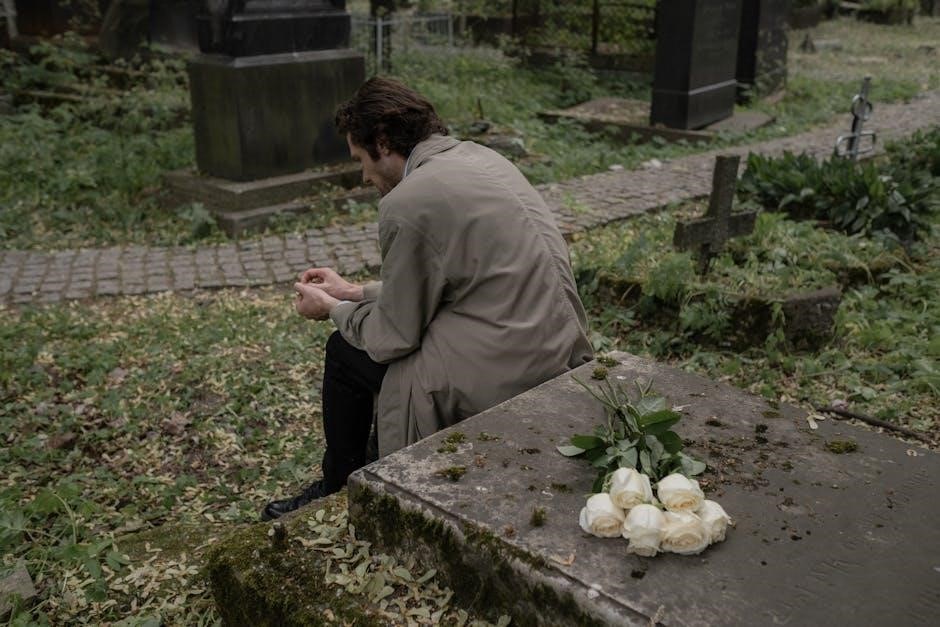
A text doesn’t exist in a vacuum; it’s a product of its time, reflecting the social, political, and cultural influences prevalent during its creation. Understanding these influences—the author’s historical milieu—provides a framework for deciphering the work’s nuances and complexities. Historical context illuminates the author’s choices, revealing why certain themes, symbols, or stylistic elements were employed. Dismissing this context diminishes the richness and depth of the literary experience, hindering a truly informed reading.
Reconciling Author and Text
While “The Death of the Author” (available as a PDF) advocates for prioritizing the text itself, a complete dismissal of the author isn’t necessarily required or even desirable. A more nuanced approach acknowledges the author’s influence without granting them absolute authority over interpretation.
Instead of “killing” the author, we can view them as one potential source of information among many. Biographical details and historical context can inform our reading, offering insights into the work’s origins and potential meanings, but they shouldn’t dictate those meanings. The text remains the primary site of meaning-making, but the author’s presence, as a historical and cultural figure, can enrich our understanding. This reconciliation allows for a more comprehensive and informed engagement with literature.
Contemporary Relevance of the Debate
The debate ignited by Barthes’s “The Death of the Author” (widely accessible as a PDF) remains strikingly relevant today, particularly in the digital age. The proliferation of online content, collaborative writing platforms, and fan fiction directly challenge traditional notions of authorship and ownership.
Questions surrounding intellectual property, remix culture, and the authority of original creators echo Barthes’s core arguments. The ease with which texts can be copied, altered, and re-authored online necessitates a re-evaluation of the author’s role. Furthermore, the rise of AI-generated content further complicates the concept of authorship, prompting us to reconsider what it means to create and interpret texts in a rapidly evolving media landscape. The essay continues to provide a crucial framework for navigating these complexities.

“The Death of the Author” in the Digital Age
The accessibility of Barthes’s essay as a PDF fuels ongoing discussions about authorship in a world of readily copied and remixed online content.
Authorship and Ownership in Online Content
The digital realm dramatically complicates traditional notions of authorship, echoing Barthes’s arguments. Easily shared as a PDF, “The Death of the Author” gains new relevance when considering online content. Ownership becomes blurred with the ease of copying, pasting, and remixing.
Who owns a meme? A viral video? A collaboratively edited Wikipedia entry? The author’s singular control diminishes as content circulates and transforms. This challenges copyright laws and raises questions about intellectual property. The original author’s intent, a key concern for Barthes, becomes increasingly difficult to ascertain or even prioritize amidst countless iterations.
The very act of distributing the essay as a PDF contributes to this decentralization of authority, allowing widespread access and interpretation, further solidifying the reader’s role in meaning-making.
The Rise of Collaborative Writing
Barthes’s deconstruction of the author finds a striking parallel in the surge of collaborative writing platforms, readily accessible even through a simple PDF search of his essay. Wikis, shared documents, and open-source projects demonstrate a shift away from individual creation. Multiple voices contribute, blurring the lines of authorship and ownership.
This collective approach directly challenges the romanticized notion of the solitary genius. The text is no longer solely the product of one mind, but a negotiated outcome of many. “The Death of the Author,” as a widely circulated PDF, encourages us to view such texts not as expressions of intent, but as spaces where meaning is constructed through interaction.
The focus shifts from who wrote it to how it was written, and by whom – a multitude, rather than a single, identifiable author.
Fan Fiction and the Re-Authoring of Texts
The proliferation of fan fiction embodies Barthes’s ideas, readily explored within the accessible PDF version of “The Death of the Author.” Fan works actively dismantle authorial control, demonstrating the reader’s power to reshape narratives. These reinterpretations aren’t seen as derivative, but as new textual spaces born from the original.
This “re-authoring” process highlights that meaning isn’t fixed by the initial creator. Readers become active participants, transforming characters, plots, and themes according to their own interpretations. The original author’s intent, as Barthes argues, becomes irrelevant; the text lives on through these new creations, easily shared and discussed online.
Finding and analyzing fan fiction alongside the original essay PDF reveals a dynamic interplay between text, reader, and the evolving concept of authorship.
PDF Format and Textual Stability vs. Fluidity

The very format of the “Death of the Author” essay as a PDF presents an interesting paradox; While a PDF aims for textual stability – a fixed representation of Barthes’s words – the essay itself argues against fixed meaning. This creates a tension between the medium and the message.
Traditionally, a printed text offered a sense of finality. However, the digital age, and the ease of sharing a PDF, allows for endless reproduction and recontextualization. Barthes’s argument gains new resonance in this environment, where texts are constantly being remixed and reinterpreted.
The PDF, therefore, becomes a vessel for a fluid idea; It preserves the original while simultaneously enabling the very deconstruction of authorial intent that Barthes champions, readily available for analysis.

Practical Applications & Further Research
Accessing the “Death of the Author” PDF facilitates deeper analysis, enabling students and scholars to apply Barthes’s theories to diverse texts and contexts.
Analyzing Texts Without Authorial Bias
Employing Barthes’s framework, readily available through a “Death of the Author” PDF, necessitates a shift in critical focus. Instead of seeking authorial intent – biographical details or stated purposes – analysis centers on the text itself as a multi-dimensional space.
This approach encourages readers to explore the interplay of language, symbols, and structures within the work, independent of the creator’s background. Consider the text as a woven fabric of influences, not a singular expression of a mind.
Deconstructing preconceived notions about the author allows for multiple interpretations, acknowledging the reader’s active role in meaning-making. The text’s inherent ambiguities and contradictions become points of exploration, rather than flaws to be resolved by appealing to authorial authority. Ultimately, this method fosters a richer, more nuanced understanding of the literary work.
Utilizing “The Death of the Author” in Education
Integrating Barthes’s “The Death of the Author,” easily accessible as a PDF, into curricula fosters critical thinking and independent analysis. Students can learn to detach interpretations from biographical assumptions, focusing instead on textual evidence and internal structures.
Assignments can challenge students to explore multiple readings of a text, justifying their interpretations based solely on the work itself. Discussions can center on how different readers construct meaning, highlighting the subjective nature of interpretation.
This approach encourages students to become active participants in the meaning-making process, rather than passive recipients of authorial intent. Analyzing texts without relying on external sources—like author interviews—promotes close reading skills and a deeper engagement with the literary work. It empowers students to confidently formulate their own informed opinions.
Resources for Studying Roland Barthes
Numerous resources exist for delving deeper into the work of Roland Barthes, including readily available academic articles and critical analyses. “The Death of the Author” itself, frequently found as a PDF online, serves as a foundational text.
Several university websites offer course materials and lecture notes dedicated to Barthes’s theories. Academic databases like JSTOR and Project MUSE provide scholarly articles exploring his influence on literary theory and cultural studies.
Furthermore, books offering comprehensive overviews of post-structuralism and semiotics often dedicate significant chapters to Barthes’s contributions. Online encyclopedias of literary criticism and philosophy also provide accessible introductions to his key concepts. Exploring these resources will enrich understanding of his complex and influential ideas.
Finding and Accessing the PDF of the Essay
Locating a PDF version of Roland Barthes’s “The Death of the Author” is remarkably straightforward due to its widespread academic use. A simple internet search using keywords like “Death of the Author PDF” or “Roland Barthes essay PDF” yields numerous results.
Many university websites and online literary archives host freely accessible PDF copies. Platforms like Academia.edu and ResearchGate often contain uploaded versions shared by scholars. Be mindful of source reliability when downloading; prioritize academic institutions or reputable online libraries.
Google Scholar is another excellent resource, frequently linking to PDFs available through university subscriptions or open access journals. Ensure the downloaded file is complete and accurately represents the original 1967 essay for optimal study.