Black’s Law Dictionary 1st Edition (1891): A Comprehensive Plan
Black’s Law Dictionary’s inaugural 1891 edition, available as a PDF, represents a foundational legal lexicon.
Digitized versions, sourced from the Internet Archive and Georgetown University Law Library, offer searchable access to this historic text.

Historical Context & Publication Details
Black’s Law Dictionary’s first edition emerged in 1891, a period of significant legal development in both the United States and England. Compiled by Henry Campbell Black, the dictionary aimed to standardize legal terminology, addressing inconsistencies prevalent at the time. The publication coincided with the rise of legal scholarship and the increasing need for a comprehensive legal reference work.
The PDF versions circulating today are derived from physical copies, meticulously scanned and digitized. The Internet Archive hosts downloadable files, including single-page processed JP2 ZIPs and torrents, facilitating access. Georgetown University Law Library contributed to the preservation and online availability of this crucial resource, uploading the dictionary in February 2016. These digital formats ensure the enduring accessibility of Black’s original work, allowing researchers and legal professionals to study its historical context and foundational definitions.
The Author: Henry Campbell Black
Henry Campbell Black (1860-1927) was a prominent American lawyer and lexicographer, best known for compiling Black’s Law Dictionary. His dedication to legal precision and clarity drove the creation of the first edition in 1891. Black meticulously defined legal terms, drawing from both American and English jurisprudence, aiming for a standardized and authoritative resource.
The enduring legacy of his work is evident in the continued accessibility of the 1891 edition as a PDF. Digitized copies, available through platforms like the Internet Archive, allow modern scholars to examine Black’s original definitions. A review of the dictionary appeared in the Harvard Law Review (5 Harv. L. Rev. 155), acknowledging its significance. The PDF format, created through scanning and OCR technology, preserves Black’s scholarship for future generations, ensuring his contribution to legal lexicography remains readily available.
Significance of the 1st Edition
The 1891 Black’s Law Dictionary marked a pivotal moment in American legal scholarship, establishing a standardized legal vocabulary. Prior to its publication, legal definitions were often inconsistent and ambiguous. This first edition, now widely available as a searchable PDF, provided a comprehensive compilation of legal terms, influencing legal arguments and research for decades.

Its significance lies in its attempt to synthesize American and English jurisprudence, covering both ancient and modern legal concepts. The PDF format facilitates easy access and searchability, allowing legal professionals and scholars to analyze Black’s original definitions. The Internet Archive hosts digitized versions, including JP2 and TORRENT files, ensuring preservation. Even comparisons to Webster’s Collegiate Dictionary highlight its specialized legal focus, solidifying its place as a cornerstone of legal literature.
Availability & Formats
Black’s Law Dictionary’s 1st Edition (1891) enjoys robust availability thanks to digitization efforts. The primary format encountered today is the PDF, readily downloadable from platforms like the Internet Archive. Georgetown University Law Library also contributes to its accessibility. Beyond standard PDFs, variations exist, including SINGLE PAGE PROCESSED JP2 ZIP files for archival purposes.
Notably, a CD-ROM version containing both the 1st and 2nd editions offers searchable functionality using programs like Acrobat Reader, enabling easy text copying and pasting. TORRENT downloads are also available, though users should exercise caution. The PDFs are created from physical scans, often in color, reflecting the original publication. File sizes vary depending on the format and resolution, but generally remain manageable for modern computers, ensuring widespread access to this historical legal resource.
PDF Availability on Internet Archive
The Internet Archive serves as a crucial repository for the Black’s Law Dictionary 1st Edition (1891) in PDF format. Users can directly download the PDF with text, facilitating full-text searching and legal research. The archive also provides a SINGLE PAGE PROCESSED JP2 ZIP option, ideal for archival preservation and detailed image examination.
Uploaded by Leah Prescott on February 11, 2016, the digitized version boasts impressive technical specifications. OCR (Optical Character Recognition) processing, utilizing tesseract 5.0.0-alpha-20201231-10-g1236, ensures high text accuracy with a confidence level of 98.85%. The PDF module version further enhances readability. The identifier-ark is ark:/13960/t5gc2pn4s. This comprehensive digitization allows researchers and legal professionals to access and analyze this foundational legal text with ease, preserving its legacy for future generations.
CD-ROM Versions & Searchability
Beyond online availability, Black’s Law Dictionary, 1st and 2nd Editions (1891 & 1910), are accessible on a combined CD-ROM (DVD format) from vendors like Amazon.com. This format offers a convenient offline resource for legal professionals and researchers. A key advantage of the CD-ROM version is its enhanced searchability.
Both editions are presented as SEARCHABLE PDF documents, compatible with programs like Acrobat Reader. This allows users to quickly locate specific words or phrases within the extensive legal terminology. Furthermore, sections of text can be easily copied and pasted for use in legal documents or research papers. The CD-ROM versions were created through physical scanning, resulting in color PDF books, providing a visually accurate representation of the original texts. This offers a robust alternative to solely relying on online PDF access.

Content & Scope of the 1st Edition
Black’s Law Dictionary, 1st Edition (1891), meticulously defines the “terms and phrases of American and English jurisprudence, ancient and modern.” This foundational work aimed to provide a comprehensive legal lexicon for the era. The PDF versions available through the Internet Archive faithfully reproduce this original scope, offering access to a vast collection of legal definitions.
The dictionary doesn’t limit itself to contemporary legal terms; it delves into historical and archaic language used in legal contexts. This broad coverage makes it a valuable resource for understanding the evolution of legal terminology. Researchers utilizing the PDF format can explore definitions spanning centuries of legal practice. The PDF’s searchability allows for targeted investigation of specific terms, revealing their historical usage and nuanced meanings within both American and English legal systems. It truly represents a landmark achievement in legal scholarship.
Definitions of American & English Jurisprudence
The 1st Edition of Black’s Law Dictionary (1891) distinctly focuses on defining terms within both American and English legal systems. The PDF versions, readily accessible via platforms like the Internet Archive, showcase this dual focus. Henry Campbell Black meticulously compiled definitions reflecting the jurisprudence of both nations, acknowledging their shared historical roots and emerging divergences.
The PDF allows researchers to directly compare and contrast how legal concepts were understood and applied in each jurisdiction. This comparative element is crucial for understanding the development of legal thought. The dictionary’s scope extends beyond simple definitions, often including historical context and examples of usage within legal cases. Utilizing the searchable PDF format, scholars can efficiently trace the evolution of specific legal terms across the Atlantic, revealing the interplay between American and English legal traditions. It’s a vital resource for comparative legal studies.
Coverage of Ancient & Modern Legal Terms
Black’s Law Dictionary’s 1st Edition (1891), now widely available as a searchable PDF, demonstrates a remarkable breadth in its coverage of legal terminology. The digitized version, accessible through the Internet Archive, reveals Black’s intention to encompass not only contemporary legal language but also terms rooted in ancient legal traditions.
The PDF allows easy exploration of definitions spanning centuries, from Roman law principles to emerging concepts in 19th-century jurisprudence. This historical depth provides valuable context for understanding the evolution of legal thought. Researchers can trace the lineage of modern legal terms back to their ancient origins, illuminating the enduring influence of classical legal systems. The comprehensive nature of the PDF makes it an invaluable resource for legal historians and anyone seeking a deeper understanding of the historical foundations of law. It’s a testament to Black’s scholarly ambition.
Comparison to Webster’s Collegiate Dictionary
The Black’s Law Dictionary, 1st Edition (1891), in its readily available PDF format, distinguishes itself sharply from general dictionaries like Webster’s Collegiate. While Webster’s aims for broad linguistic coverage, Black’s focuses exclusively on legal terminology, providing nuanced definitions tailored to the legal profession. As noted in the Washington and Lee Law Review, a term’s presence in Webster’s doesn’t necessitate its inclusion in a legal dictionary if it lacks legal relevance.
The PDF reveals Black’s deliberate exclusion of definitions deemed irrelevant to legal practice, prioritizing precision and specificity over comprehensiveness. This focused approach offers legal scholars and practitioners a dedicated resource, avoiding the ambiguity inherent in general-purpose dictionaries. The searchable PDF allows for quick comparison, highlighting the specialized nature of legal language and the importance of accurate legal definitions. It’s a targeted resource, unlike its broader counterparts.
Technical Aspects of Digital Copies
The digital availability of Black’s Law Dictionary, 1st Edition, primarily as a PDF, relies on sophisticated scanning and Optical Character Recognition (OCR) technology. The Internet Archive and Georgetown University Law Library offer versions created through physical scanning, resulting in color PDFs. OCR, specifically tesseract 5.0.0-alpha-20201231-10-g1236, converts the scanned images into searchable text, boasting a 98.85% page number confidence.
Various file formats are available, including PDF, single-page JP2 (zipped), and TORRENT downloads. The PDF format enables easy copying and pasting of text. While the OCR process isn’t flawless, it significantly enhances usability. These digital copies, often substantial in file size, provide researchers with accessible and searchable versions of this historical legal text, overcoming the limitations of the original print edition.

Scanning & PDF Creation Process
Creating digital copies of Black’s Law Dictionary, 1st Edition, involved a meticulous scanning process. Physical copies of the 1891 text were scanned to produce image-based files. These scans were then converted into PDF format, preserving the original layout and color of the book. The Internet Archive and Georgetown University Law Library utilized this method for their digital offerings.
The process wasn’t simply image capture; it required careful attention to detail to ensure clarity and completeness. High-resolution scanning was crucial for accurate text representation. Following scanning, the images underwent processing to optimize them for digital viewing and archiving. The resulting PDF files, while large, offer a faithful reproduction of the original 1891 edition, enabling researchers to access this historical resource in a convenient and durable format.
OCR Technology & Text Searchability
A significant enhancement to the Black’s Law Dictionary 1st Edition PDFs is the application of Optical Character Recognition (OCR) technology. OCR converts the scanned images of text into machine-readable text data. The Internet Archive notes the use of tesseract 5.0.0-alpha-20201231-10-g1236 for this purpose, achieving a high degree of accuracy with a confidence level of 98.85% in page number recognition.
This OCR process enables full-text searchability within the PDF document. Users can quickly locate specific terms, phrases, or legal concepts within the 1891 edition, a feature unavailable with simple image-based PDFs. The searchable functionality, as highlighted by Amazon.com, allows for easy copying and pasting of text, greatly facilitating legal research and analysis. This makes the digital version a powerful tool for scholars and practitioners alike.
File Formats: PDF, JP2, TORRENT
The Black’s Law Dictionary 1st Edition (1891) is primarily accessible in PDF format, offering widespread compatibility and ease of use. The Internet Archive provides download options including a standard PDF with text, and a JP2 format, specifically a “SINGLE PAGE PROCESSED” JP2 ZIP file. This JP2 format is a high-resolution image format suitable for detailed viewing and archival purposes.
Furthermore, a TORRENT download option is also available on the Internet Archive, facilitating peer-to-peer file sharing for users seeking a faster or more reliable download experience. Amazon.com offers the first and second editions on a single CD in PDF format. These diverse file formats cater to varying user needs and technical capabilities, ensuring broad access to this important historical legal resource. The availability of multiple formats enhances the dictionary’s usability and preservation.
Legal Scholarship & Citations

Black’s Law Dictionary, even in its 1st Edition (1891), has garnered attention within legal scholarship. A review appeared in the Harvard Law Review (5 Harv. L. Rev. 155) upon its release, demonstrating immediate academic interest in the work. While later editions are more frequently cited today, researchers examining the historical development of legal terminology often refer back to this foundational edition.
The PDF availability of the 1st edition facilitates this research, allowing scholars to directly examine the original definitions and context. Citations to Black’s, even from the 1891 edition, can be found in legal arguments and academic papers, particularly when discussing the evolution of legal concepts. The Washington and Lee Law Review references its definitions. Access to the PDF version simplifies the process of verifying original definitions and tracing the historical usage of legal terms.
Reviews in the Harvard Law Review

The Harvard Law Review dedicated a review to Black’s Law Dictionary’s 1st Edition in Volume 5 (5 Harv. L. Rev. 155). This early assessment, published shortly after the dictionary’s 1891 release, signaled its immediate recognition within the legal academic community. The review likely assessed the scope, accuracy, and clarity of definitions presented by Henry Campbell Black.
Access to the PDF version of the 1st edition allows modern scholars to revisit the context of this initial reception. Researchers can now compare the Harvard Law Review’s critique with the dictionary’s actual content, evaluating whether the initial assessment has stood the test of time. The review’s focus, as indicated by the citation, was on the dictionary itself, establishing its importance as a legal resource. The PDF format ensures this historical perspective remains readily available for study and analysis.
Use in Legal Arguments & Research

The PDF of Black’s Law Dictionary’s 1st Edition (1891) serves as a valuable primary source for legal historians and researchers. While subsequent editions have become more prevalent, the original provides insight into the evolution of legal terminology. Accessing the digitized version allows examination of definitions as they were understood during a pivotal period in American jurisprudence.
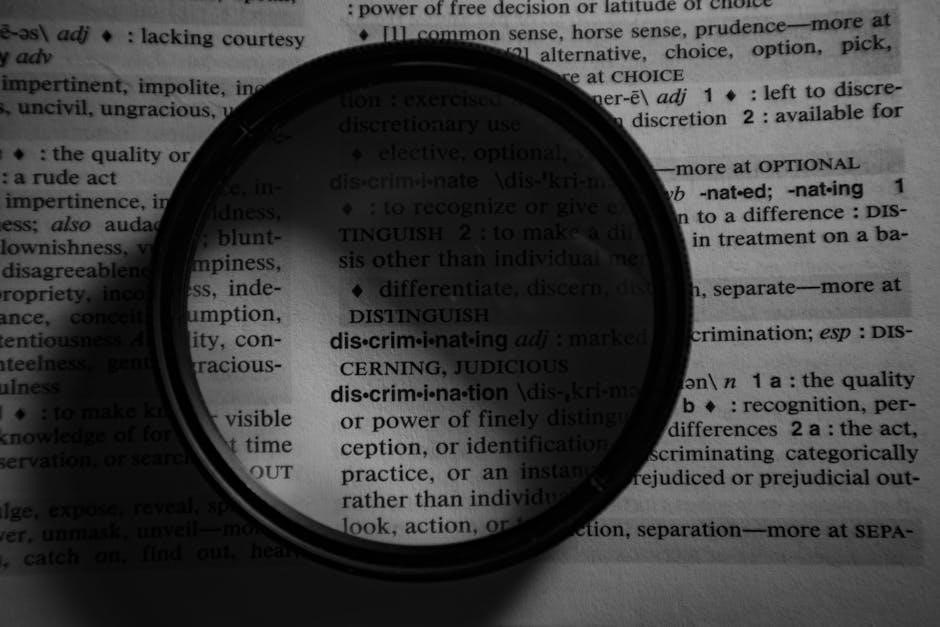
Although modern legal arguments typically rely on current editions, the 1891 PDF can be crucial for reconstructing historical legal reasoning. Researchers can analyze how terms were defined and applied in past cases. The Internet Archive’s availability facilitates this process. The searchable PDF format enables efficient identification of specific terms and their original meanings, aiding in nuanced historical legal research and potentially informing arguments concerning the intent behind older statutes.
Accessing the Dictionary Today
Currently, the Black’s Law Dictionary 1st Edition (1891) is readily accessible in PDF format through several online platforms. The Internet Archive hosts a downloadable PDF version, offering both “WITH TEXT” and “SINGLE PAGE PROCESSED JP2 ZIP” options, alongside a TORRENT download. Georgetown University Law Library also contributed to its digital preservation, uploading the file on February 11, 2016.
These digital copies allow researchers and legal enthusiasts to explore the historical lexicon without needing a physical copy. The PDF’s searchable text, enabled by OCR technology (tesseract 5.0.0-alpha-20201231-10-g1236), simplifies locating specific terms. Furthermore, a CD-ROM version containing both the 1st and 2nd editions is available on Amazon.com, providing a searchable PDF format for offline use. File sizes vary depending on the format chosen.
Georgetown University Law Library Upload
Georgetown University Law Library plays a crucial role in preserving and providing access to the Black’s Law Dictionary 1st Edition (1891) in PDF format. Their contribution, uploaded by Leah Prescott on February 11, 2016, is a significant resource for legal scholars and researchers. This upload is available through the Internet Archive, ensuring wider dissemination of this historical legal text.
The library’s digital copy facilitates research by offering a readily accessible version of the dictionary, circumventing the need for physical access. The PDF benefits from OCR processing (identified as tesseract 5.0.0-alpha-20201231-10-g1236), enabling full-text searching. This feature is invaluable for locating specific definitions and tracing the evolution of legal terminology. The upload’s metadata confirms its preservation status and accessibility for future generations of legal professionals.

Downloading Options & File Sizes
The Black’s Law Dictionary 1st Edition (1891) PDF is available through multiple download options on the Internet Archive. Users can choose from a single PDF with text, a single-page processed JP2 ZIP file, or a TORRENT download. Additionally, a comprehensive download of 23 files, and 8 original files are also provided. These varied formats cater to different user needs and bandwidth capabilities.
While specific file sizes aren’t explicitly stated, the PDF version is substantial due to the comprehensive nature of the original text and the inclusion of scanned images. The JP2 format offers a potentially smaller file size, prioritizing image quality. The TORRENT option is ideal for users with slower connections, allowing for distributed downloading. Accessing these files requires a free Internet Archive account, facilitating preservation and wider access to this important legal resource.
Copyright & Usage Considerations
As the Black’s Law Dictionary 1st Edition was published in 1891, it is firmly within the public domain in the United States and most other jurisdictions. This means the PDF versions available on platforms like the Internet Archive can be freely downloaded, copied, distributed, and used for any purpose – including research, scholarship, and personal use – without requiring permission from any copyright holder.
However, while the text itself is free to use, any modern additions or modifications to the digitized versions, such as scanning enhancements or OCR corrections, may be subject to separate copyright. Users should respect the terms of service of the hosting platform (e.g., Internet Archive) and attribute the source appropriately when utilizing the PDF. Commercial use is generally permitted, but it’s advisable to verify local laws regarding the reproduction of historical works.